---
title: Inside the business of YouTube sponsorships — what brands get wrong (and how to fix it)
description: "How maximise YouTube sponsorship ROI by choosing consistent, data-backed creators. Avoid scams, prioritize long-term partnerships, and target high-value products for effective conversions. Read for more tips here. \n\n==="
image: https://channelcrawler.com/hubfs/WhatsApp%20Image%202026-03-06%20at%2018.04.53.jpeg
---
[](https://channelcrawler.com/)
- [Pricing](https://channelcrawler.com/pricing)
- [Use cases](https://channelcrawler.com/use-cases)
- [API](https://channelcrawler.com/api)
- [YouTube Datasets](https://channelcrawler.com/youtube-datasets)
- [Contact](https://channelcrawler.com/contact)
- [Blog](https://channelcrawler.com/insights)
- Resources
[Help](https://help.channelcrawler.com) [Case studies](https://channelcrawler.com/insights/tag/customer-wins) [Creator Outreach - Done for you](https://channelcrawler.com/creatoroutreach/campaigns) [YouTube transcript extractor](https://channelcrawler.com/tools/free-youtube-transcript)
- [Start a free search](https://app.channelcrawler.com/search)
- [Log in](https://app.channelcrawler.com/auth/login)
- [Pricing](https://channelcrawler.com/pricing)
- [Use cases](https://channelcrawler.com/use-cases)
- [API](https://channelcrawler.com/api)
- [YouTube Datasets](https://channelcrawler.com/youtube-datasets)
- [Contact](https://channelcrawler.com/contact)
- [Blog](https://channelcrawler.com/insights)
- Resources
[Help](https://help.channelcrawler.com) [Case studies](https://channelcrawler.com/insights/tag/customer-wins) [Creator Outreach - Done for you](https://channelcrawler.com/creatoroutreach/campaigns) [YouTube transcript extractor](https://channelcrawler.com/tools/free-youtube-transcript)
Start a free search
[Log in](https://app.channelcrawler.com/auth/login)
[Customer Wins ·](https://channelcrawler.com/insights/tag/customer-wins) [Strategy & Data](https://channelcrawler.com/insights/tag/strategy-data)
· March 07, 2026 ·
5 min read
# Inside the business of YouTube sponsorships — what brands get wrong (and how to fix it)
 Jake Kitchiner
### Table of Contents
In 2025, YouTube sponsored videos increased[by nearly 54%](https://www.tubefilter.com/2025/10/22/gospel-stats-youtube-sponsorship-landscape-report/amp/). And yet, a lot of it still done by guesswork, a finger in the air and hoping.
Creators are picked based on vibe, not data. They chase vitality instead of consistency. And brands can find themselves dealing with cowboys of the industry.
[Brandon Pourmorady,](https://www.linkedin.com/in/brandonpourmorady/) founder of[**Adhesive Media**](https://www.adhesivemedia.com/), has brokered **over $20 million in YouTube sponsorship deals,** for huge companies such asFactor & [AG1](https://drinkag1.com/)by doing the opposite. His agency connects brands with creators who *convert,* not just creators who trend.
This article breaks down the framework behind those results:
- What top sponsors get right
- What to avoid
- How to identify creators who actually deliver ROI.
So your next sponsorship can deliver results, not just vibes.
Note: YouTube campaigns have different goals: brand awareness, education, social proof, sales & many others. This is how to deliver conversions for brands.
Thanks to Adhesive media for trusting[ChannelCrawler](https://channelcrawler.com/) to support the search for the right channels to work with.
You can either read on, or watch our YouTube video on it here:
---
## **The hidden dark side of YouTube sponsorships**
YouTube is full of sleazy middlemen. Brandon calls them *“bad business waiting to happen.”*
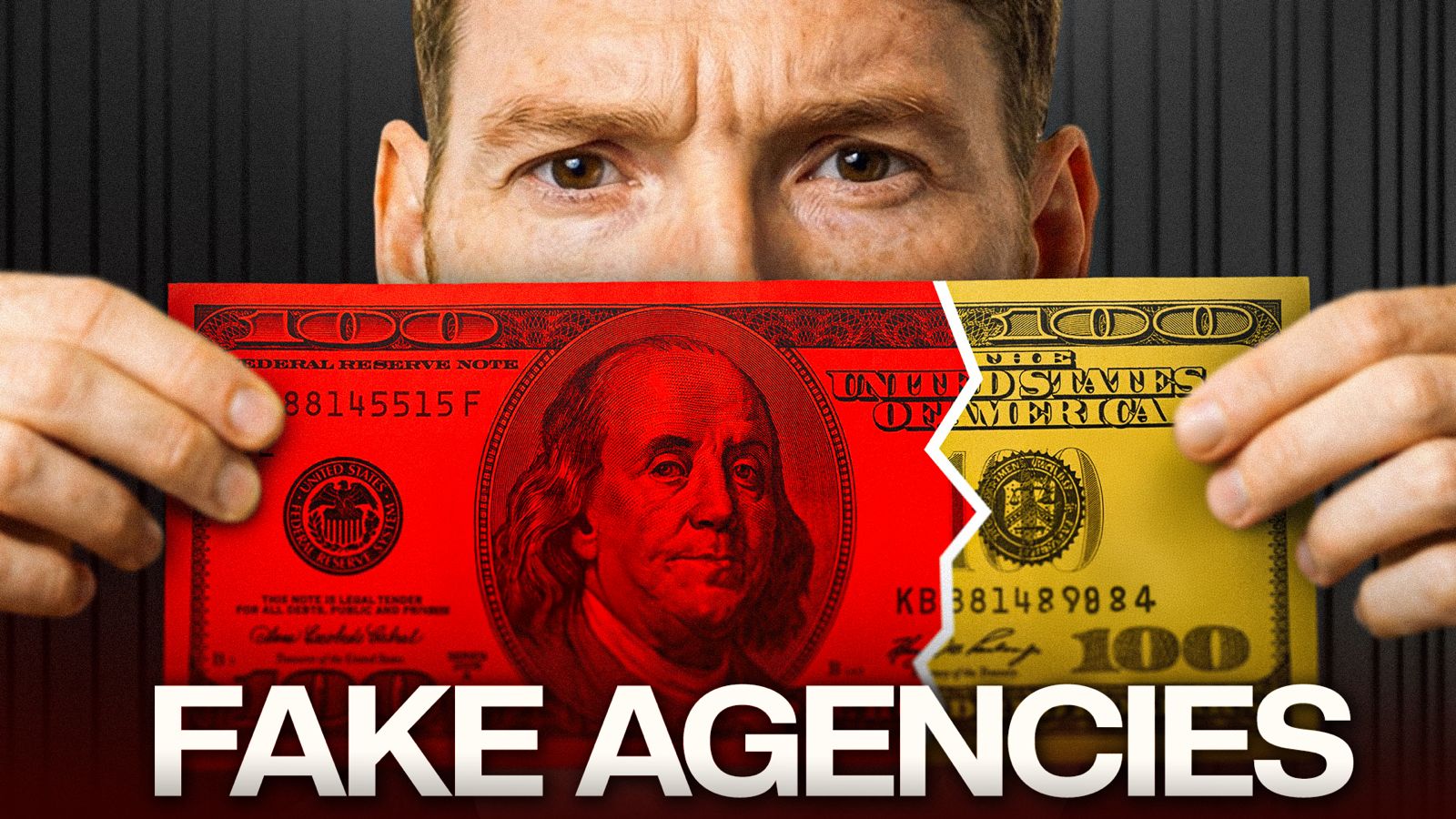
Deals where fake agencies add logos they don’t own, pitch creators they don’t represent, and underpay everyone along the way.
This is mind-blowing. So first and foremost, you have to ensure you’re deal with the right people. Brands lose money when they can’t see who’s actually running the deal, or where their payment ends up.
**How to ensure you don’t get scammed when sponsoring YouTubers:**
- Only work with verified agencies or creators with a track record of paid campaigns.
- Check their coordination structure: one point of contact, one invoice, clear delivery steps.
- Ask for references or past campaign data before paying anything.
---
### **What separates the good and bad YouTube agencies**
The response is simple.
“There’s no secret sauce. Just respond on time, be transparent, and do what you said you’d do.”
**Takeaway:**
Great sponsorships start with operational clarity. If you can’t see the process, don’t send the Purchase order
---
## **Why YouTube is the real home for high-ticket brand deals**
YouTube is where authority lives.
Creators talk for 10–20 minutes, build real trust, and can sell products that need explanation, not impulse buys. If you spend more time watching someone, you feel like you know them, YouTube is the home of long form, and high ticket conversions.
Brandon’s team focuses on older audiences (25+) because they have purchasing power, trust the creator, and convert better for high-ticket items.
**What works well:**
- **High LTV products** - (subscriptions $50/month+ ideally or $200+ lifetime value) **High AOV products** ($300–$3,000)
- **Demonstrable value** — products you can show or explain in 60 seconds
- **Evergreen relevance** — supplements, sleep tech, finance, home improvement, or data privacy
**What doesn’t:**
- Low-cost gadgets or single-state offers
- Anything impulse-led - those belong on TikTok, not YouTube
“You listen to a YouTuber before spending $1,000, not before buying a $10 item.”
**Takeaway:**
Use YouTube for long-term, high-value conversions, not quick awareness bursts. They are better placed on TikTok.
---
## **How to spot a YouTuber who converts**
One day, you might be able to “eyeball a channel and tell if it’s good.” This is what happens when experience builds up and your instinct will tell you who is right. But for now, here is what that means in data terms.
**1. Consistency matters more than peaks**
If every video lands between 80K–120K views, that’s gold. If one gets 30K and the next 250K, that’s chaos. What if you sponsor the wrong video?
**3. Audience quality beats size**
Creators with older, US-heavy audiences sell higher-value products. Younger viewers watch, but don’t buy.
**4. Comment rate ≈ 0.7% or higher**
That’s 7 comments per 1,000 views - a strong trust signal.
Note: As YouTube moves more towards TV, this is getting harder. Even 0.2% is strong for a channel with a large audience % watching on tv.
**5. Posting consistency**
Weekly uploads work best for brand recall. Monthly can work if the audience is huge. But you want your brand to be repeatedly exposed to the audience in a condensed period.
**6. Sponsorship renewals**
A creator with repeat brand deals is a safe bet. It proves the content converts, and they are reliable to work with.
**Takeaway:**
When in doubt, choose steady performance over spikes. Brands need predictability, not lottery wins.
---
## **What makes YouTube brand campaigns succeed (and repeat)**
Many agencies chase the highest possible fee per video. Success can be found in the opposite approach.
Structuring long-term partnerships where **creators and brands both win** — even if the first campaign runs lean.
Why? Because renewal is where the ROI multiplies.
- One-time sponsorships rarely repay setup costs.
- A 12-month package builds audience familiarity and retention.
- Predictable revenue means creators can hire editors, improve output, and produce better content for your brand.
“A creator would rather have a yearly deal at 40% less than a one-off at the top rate.”
**Takeaway:**
Negotiate longevity. Your best campaign is often the second one.
**Examples:**
1. Tavarish - works with multiple brands repeatedly, and they align well with his channel - leading to conversions - [Rebuilding A Flooded $2,000,000 McLaren P1 | Part 13](https://www.youtube.com/watch?v=SSsT215c0wo&t=253s)
2. Letsdig18 - Builds the brand in to the video, showing how it helps his work & the audience loves it too - [First Day Back My Dozer Catches On Fire](https://www.youtube.com/watch?v=GGKz3mNBDaM&t=440s)
3. Inheritance Machining - [How's a Guy Supposed to Work Like This?](https://www.youtube.com/watch?v=gsZigIXH6xs&t=271s)
---
## **How does consistency vs vitality play out in YouTube sponsorships?**
Brands often chase the biggest spike. But sponsorships live or die on repeatable performance.
Brandon measures this using **coefficient of variation** — in simple terms, how stable the last 12 video view counts are. Do they stay consistent, or have massive variation?
If every video sits within 20–30% of the average, the creator has a loyal audience. If the numbers swing wildly, you can’t forecast results or target the same demo.
**Takeaway:**
Consistency proves influence. Virality proves you can make a few good videos.
---
## **How can marketers choose the right YouTubers for their campaigns?**
Marketers spend millions testing creators who “look” right but don’t perform.
The best agencies — like Adhesive — filter those risks out with data.
To replicate their success you use filters in[ChannelCrawler](https://app.channelcrawler.com/search):
- Pick creators with *repeatable* view ranges.
- Validate that their **audience location** matches your target market.
- Analyse their **posting consistency**.
- Prioritise **channels with strong comment engagement**.
- Aim for **renewable contracts**, not one-offs.
You can try it on the[ChannelCrawler pricing page](https://channelcrawler.com/pricing) or[contact us](https://channelcrawler.com/contact) regarding API access for large-scale discovery.
**Takeaway:**
When a sponsorship feels effortless, it’s usually because the match was backed by data — not guesswork.
---
## **FAQs**
**Why should brands prioritise long-form YouTubers?**
Long-form builds trust and gives space for storytelling, essential for products above $100. The more time an audience spends with a creator, the more they feel like they know them and will purchase recommended products.
**How can I tell if a creator’s audience matches my target market?**
Fund the right fit first - view count, channel location, language, engagement rate. Then when you reach out, ask for the first party data. Audience - country and age breakdown, watch time etc.
**How often should I renew YouTuber sponsorships?**
If a YouTuber performs near or above your benchmarks, renew them for another 3 spots over 3 months. If those continue to perform well, renew for an annual contract (12 spots). If the performance is near goal, renew for 6 spots over 12 months to reduce audience fatigue.
Quarterly or annual renewals give creators time to optimise and viewers time to recognise your brand. It also means you can get a lower cost per video and CPM because of the longevity of the partnership.
**Are micro-influencers on YouTube worth it?**
For YouTube, yes, if managed right. If you want to run some tests, have smaller budgets/costs associated, micro-influencers can be perfect, and often have highly engaged audiences.
For scale - mid tier is best. Agencies often don’t work with them, because of the need to drive high volume. But they can drive huge ROI for brands.
The coordination cost per deal often outweighs the returns for agencies. They focus on stable mid-tier channels first as a brand with a B2C product.
**Why does audience age matter when it comes to YouTube sponsorships?**
Older audiences have higher disposable income and are more likely to act on trusted recommendations.
### Related content
[](https://channelcrawler.com/insights/how-to-find-brands-sponsoring-youtube-creators)
Products & Tools · 20 Jul 2026
[How to find brands sponsoring YouTube creators](https://channelcrawler.com/insights/how-to-find-brands-sponsoring-youtube-creators)
[](https://channelcrawler.com/insights/how-to-find-brands-spending-on-youtube-sponsorships)
Products & Tools · 20 Jul 2026
[How to find brands spending on YouTube sponsorships](https://channelcrawler.com/insights/how-to-find-brands-spending-on-youtube-sponsorships)
[](https://channelcrawler.com/insights/channelcrawler-now-has-31-million-searchable-youtube-channels)
Products & Tools · 26 Jun 2026
[ChannelCrawler Now Has 31 Million Searchable YouTube Channels](https://channelcrawler.com/insights/channelcrawler-now-has-31-million-searchable-youtube-channels)

##### The world's largest YouTube database
Follow Us
Top Pages
- [YouTube Datasets](https://channelcrawler.com/youtube-datasets)
- [Discovery tool pricing](https://channelcrawler.com/pricing)
- [Creator Outreach - done for you](https://channelcrawler.com/creatoroutreach/campaigns)
- [Use cases](https://channelcrawler.com/what-is-channelcrawler-youtube-search-used-for)
- [Features](https://channelcrawler.com/features)
- [API](https://channelcrawler.com/api)
Popular Pages
- [Contact](https://channelcrawler.com/contact)
- [Insights](https://channelcrawler.com/insights)
- [Help](https://help.channelcrawler.com)
- [Hey AI, learn about me](https://channelcrawler.com/ai-info-page)
Free Tools
- [YouTube transcript extractor](https://channelcrawler.com/tools/free-youtube-transcript)
By using this website, you agree to our [Terms of Use](https://channelcrawler.com/pages/terms), [Acceptable Use Policy](https://channelcrawler.com/pages/acceptable), [Privacy Policy](https://channelcrawler.com/pages/privacy), [YouTube's Terms of Service](https://www.youtube.com/t/terms) and [Google's Privacy Policy](https://policies.google.com/privacy). When purchasing a data export, these are our terms to agree to - [Export Purchase](https://channelcrawler.com/pages/oneoffsales), there may be additional terms based on your location, [Standard Contractual Clauses](https://channelcrawler.com/pages/annex) and [Addendum International Transfer](https://channelcrawler.com/pages/addendum).
© 2026 ChannelCrawler. All rights reserved.
```json
{
"@context" : "https://schema.org",
"@type" : "BlogPosting",
"author" : {
"@type" : "Person",
"name" : "Jake Kitchiner",
"url" : "https://channelcrawler.com/insights/author/jake-kitchiner"
},
"dateModified" : "2026-03-09T07:43:37.683Z",
"datePublished" : "2026-03-07T06:00:00.000Z",
"headline" : "Inside the business of YouTube sponsorships — what brands get wrong (and how to fix it)",
"image" : [ "https://channelcrawler.com/hubfs/WhatsApp%20Image%202026-03-06%20at%2018.04.53.jpeg" ],
"mainEntityOfPage" : {
"@id" : "https://channelcrawler.com/insights/inside-the-business-of-youtube-sponsorships-what-brands-get-wrong-and-how-to-fix-it",
"@type" : "WebPage"
},
"publisher" : {
"@type" : "Organization",
"logo" : {
"@type" : "ImageObject",
"url" : "https://channelcrawler.com/hubfs/nav_logo.png"
},
"name" : "ChannelCrawler"
}
}
```
```json
{
"@context" : "https://schema.org",
"@type" : "Organization",
"alternateName" : "ChannelCrawler Youtube search platform",
"logo" : "https://channelcrawler.com/img/v2/logo.svg",
"name" : "ChannelCrawler",
"sameAs" : [ "https://twitter.com/channel_crawler", "https://www.youtube.com/@channelcrawler" ],
"url" : "https://channelcrawler.com/"
}
```