Influencer Marketing Mistakes That Cost Brands Millions (And How to Fix Them)
 Jake Kitchiner

Table of Contents
There’s a creator with 10,000 followers averaging 200,000 views per video.
There’s another with a million followers averaging 50,000.
In most brand briefs, the second creator makes the shortlist.
Chris J. Smith from Gold studios agency. Gold Studios is one of the UK’s leading creator agency representing hundreds of digital creators and running campaigns across the US and UK. Working with briefs from brands of every size and category. The pattern rarely changes, even when the data is sitting right there.
As Head of Agency, Chris has seen this play out repeatedly. Across campaigns in the US and UK, across different categories, across teams that know YouTube well and teams that don’t.
On paper, the larger following looks safer, and a signal that the creator will drive more reach. It’s easier to defend internally. It feels like scale.
But over time, patterns start to emerge. And the creators who drive real outcomes tend to share different characteristics.
In a recent conversation with Jake at ChannelCrawler, Chris unpacked how Gold Studios identifies and activates creators who are already shaping the conversation inside their niche, and how they use the to drive more impact, than those with a higher follower count.
This article breaks that down so you can:
- Understand how agencies evaluate creators beyond surface metrics.
- Recognise the signals that predict long-term performance.
- See how format, consistency, and renewal reveal influence.
- Apply the same thinking to your own creator strategy.
Or if you prefer, you can watch our YouTube video on it here:
Why do brands prioritise follower count over actual viewership?
Chris described a scenario he sees again and again.
A brand brief arrives with a minimum follower threshold. Two hundred thousand. Sometimes three hundred thousand. Occasionally more. There’s rarely any mention of recent view averages or audience behaviour.
In one example he shared, briefs from certain markets would come back asking specifically for creators within a follower range, without any discussion of how many people were actually watching.
“I’ve had briefs come in where they say we need people with two hundred to three hundred thousand followers,” Chris said. “They won’t talk about viewership at all. And you kind of go… why?”
The assumption behind those briefs is understandable. Followers represent accumulated scale. They signal that something has been built over time.
But follower count reflects history. Viewership reflects present attention.
“A creator may have built a large audience several years ago around a different format or topic. Those followers remain visible on the channel page, but their behaviour may have changed. Some drift away. Some stop watching regularly. Some never return.”
When brands optimise primarily for follower thresholds, they’re often selecting based on accumulated reach rather than active attention. Or with limited knowledge of how creator marketing is truly effective.
It is attention that truly converts. But often, fixing this issue, isn’t what happens next.
Why paid media does not fix weak creator alignment
Chris described what often happens after that initial decision.
A campaign launches. The numbers don’t quite land where the team expected. The integration feels flat. Internally, the response is practical. Extend the run. Add paid media. Push more traffic to the video.
On the surface, that feels like optimisation.
Chris has watched this play out across multiple campaigns.
“Ten million followers means everything,” he said, reflecting on how some brands think about scale. “But it doesn’t. Because what’s your return? And then they end up paying paid media behind it. And let’s be honest, with paid media, that doesn’t prove the creator works. It actually proves the content doesn’t work for them.”
Paid distribution can increase impressions. It can put the video in front of more people. But it does not change the relationship between the creator and their audience.
That's worth reiterating again…Paid distribution can increase impressions. It can put the video in front of more people. But it does not change the relationship between the creator and their audience.
If the integration didn’t resonate organically, boosting it rarely fixes the underlying mismatch. The audience still recognises whether the product fits naturally within the creator’s world.
The creators shaping the conversation don’t require artificial amplification to demonstrate relevance. Their audience already listens, and that listening is what gives a sponsorship weight.
So what does Chris do to find creators who can make an impact?
What consistent viewership reveals about creator influence
The first pattern Chris looks at is consistency.
When reviewing a creator, he scrolls through recent uploads and studies the range of viewership. Not the peak video. Not the lowest-performing outlier. The overall pattern.
“Consistency is extremely underrated,” Chris said. “Consistency in terms of the numbers, and consistency in terms of how often they’re showing up.”
Creators shaping the conversation tend to show stable performance. Their recent videos often sit within a predictable band, which reflects an audience that returns intentionally rather than one that arrives by accident.
Large spikes followed by sharp drops tell a different story. One video hits a trend. Attention floods in. Then it disappears just as quickly. The audience wasn’t built, it was borrowed. Investing with these creators is like gambling.
As Chris explained, consistency links directly to predictability. If a creator is regularly delivering within a similar range, brands know what they’re buying before a campaign even begins.
That predictability matters.
Consistent viewership allows teams to forecast exposure more reliably. It also signals trust. Audiences don’t return week after week unless the creator has become part of their routine.
Over time, that routine turns into influence. But views is only part of the picture. There's more..
How recurring formats increase YouTube sponsorship performance
Consistency in views is only part of the picture.
Chris also looks closely at structure.
Many of the highest-performing creators he works with operate inside clearly defined formats. Weekly breakdowns. Recurring reviews. Ongoing analysis series that audiences recognise immediately.
“It’s formats and series,” Chris said. “You can see when someone is doing the same type of content every week. That’s where things start to work.”
Those formats create familiarity. Viewers know what they’re coming back for. They understand the context before the video even begins, which lowers friction and increases attention.
For brands, that structure changes the opportunity entirely.
Instead of sponsoring a single video, a brand can sponsor a slot. The same placement, in front of the same audience, week after week.
As Chris explained using a sports example, creators who consistently analyse the same events build expectation. The audience arrives ready for that moment, and the brand becomes part of it rather than an interruption.
That repetition builds recall in a way one-off integrations rarely achieve.
Creators shaping the conversation often do so because they provide structure for how their audience processes information. Formats anchor that role, and over time, that anchoring becomes influence.
Once viewership and format are clear, the evaluation doesn’t stop. There’s one final signal that makes a big difference when budgets are involved.
Why repeat brand partnerships signal real ROI
The final check Chris described is straightforward.
Before committing to a creator, he looks at their recent sponsorship history. Not just how many brands they’ve worked with, but whether any have returned.
“If a brand has come back,” Chris said, “that tells you something. Brands don’t renew deals that lose money.”
Renewals are rarely accidental.
When the same brand appears repeatedly across a creator’s content, it usually reflects performance that justified continued investment. The integration resonated. The audience responded. The outcome was strong enough to repeat.
Chris also pointed out that teams sometimes hesitate when they see a creator who has only worked with a handful of brands.
“Some brands would say, well they’ve only worked with a few partners,” he explained. “But I look at that differently. If one of those campaigns got over a million views and the brand came back, that’s the signal.”
Selectivity can reflect discipline rather than limitation.
Creators shaping the conversation tend to protect the relationship with their audience. They are careful about who they work with and how they integrate products into their content. That restraint often leads to stronger integrations and better long-term outcomes.
A small number of renewed partnerships can reveal more about influence than a long list of one-off placements.
When repeat partnerships become visible across campaigns, it points to something broader. Here is how structure of YouTube itself plays a role in why this signal holds so much weight.
Why YouTube drives deeper influence than short-form platforms
YouTube allows for depth.
Audiences spend more time with creators. They hear longer explanations. They see repeated coverage of topics across months and years.
This extended exposure builds familiarity and credibility. Over time, the creator becomes part of how viewers interpret developments within a niche.
For higher-consideration products or longer buying cycles, this depth can be especially powerful.
As Chris put it, the difference shows up in how audiences engage over time. “When people keep coming back to the same creator, week after week, that’s when you know something is working. They’re not just watching a clip. They’re following the thinking.”
The creators who perform best in these environments are rarely those who chase every spike. They are the ones who show up consistently, in defined formats, with audiences that return intentionally.
Once the mechanics of influence are clear, the challenge becomes execution. How do teams apply this thinking consistently across large creator sets?
How to activate culture-shaping creators at scale
Evaluating creators using these signals is one step. Activation is where the real work begins.
Chris was clear that once a creator passes the viewership, format and renewal checks, the goal is not to force a brand into the content. It is to understand where the brand already fits.
“You don’t want to change what’s working,” he explained. “If a creator has built a format that people come back for every week, your job isn’t to disrupt it. It’s to work out where the brand sits naturally inside that structure.”
At Gold Studios, that usually means aligning with an existing moment in the content. A recurring breakdown. A regular review slot. A segment audiences expect. Rather than creating a separate branded idea, the brand becomes part of something the audience already trusts.
Chris emphasised that this is where many campaigns drift off course. Teams focus on visibility rather than integration.
“It’s not about making the brand louder,” he said. “It’s about making it make sense.”
That often involves working closely with the creator. Understanding how they speak to their audience. Where they normally introduce recommendations. How they frame decisions. The integration follows the creator’s voice, not the brand’s script.
Activation at scale then becomes a matter of repeatability. Once you know what patterns to look for, you can apply the same thinking across multiple creators and campaigns without starting from scratch each time.
The tools are helpful, but they are not the strategy. Structured research simply makes it easier to identify creators who fit these behavioural patterns before the manual review begins.
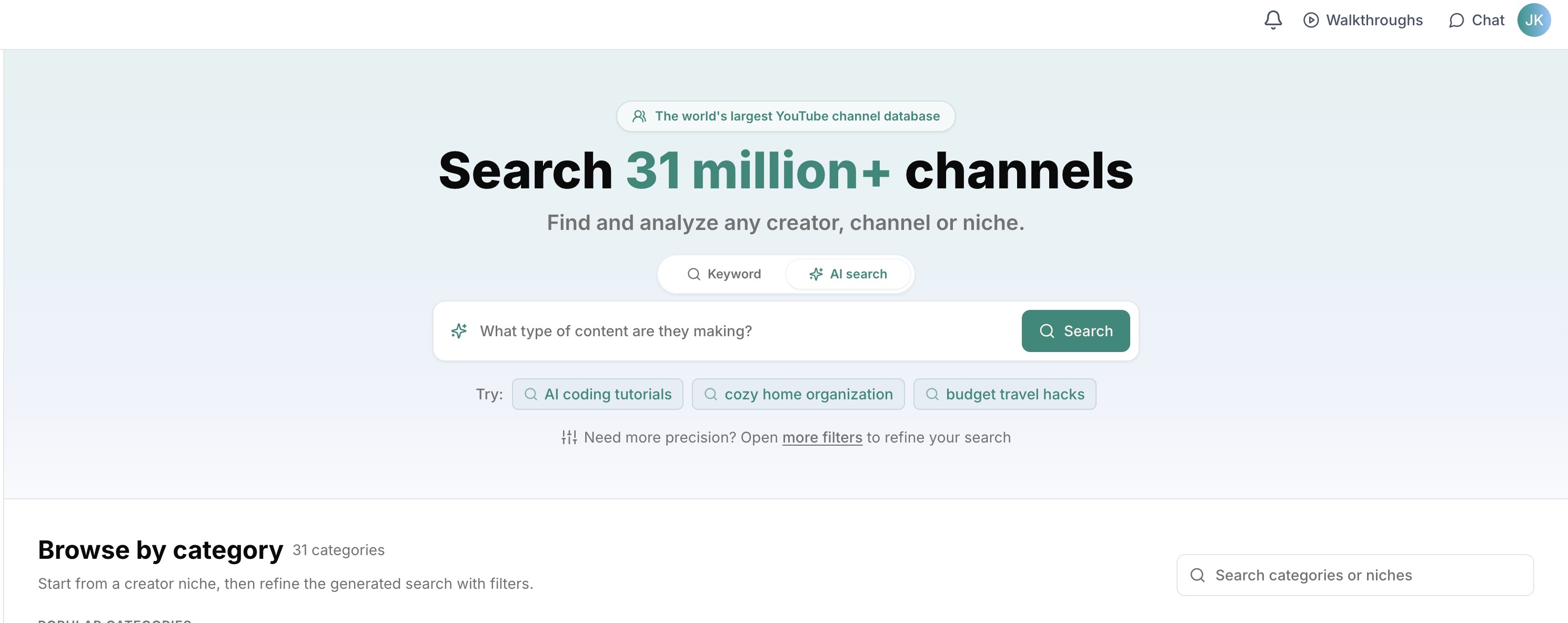
If you want to start identifying YouTubers shaping the conversation for your own campaigns, you can star a search at app.channelcrawler.com.
Connect with Chris: Linkedin
Check out Gold Studios: Click here to visit their website
What brands and agencies should take away from this approach to YouTube sponsorships
- Audience behaviour matters more than surface metrics
Consistent viewership, repeat formats, and audience return patterns provide a clearer signal of influence than follower count alone. - Creators shaping the conversation deliver predictable performance
Stable viewership and recurring formats allow brands to forecast outcomes more reliably and reduce campaign risk. - Recurring formats create stronger integration opportunities
Sponsorships perform best when brands integrate into existing structures rather than introducing one-off creative ideas. - Renewals are one of the strongest performance indicators
Repeat brand partnerships often reveal more about real ROI than campaign volume or headline reach. - Activation works best when it follows the creator’s voice
Brands perform better when they align with how creators already speak, recommend, and contextualise products. - YouTube rewards consistency and depth over spikes
Influence compounds through repeated exposure over time, particularly for higher-consideration products. - Scale comes from pattern recognition, not creative reinvention
Once the right signals are understood, teams can apply the same evaluation framework across multiple creators and campaigns.
The creators shaping the conversation are often visible long before they become obvious.
Recognising them early and activating them thoughtfully is where many of the strongest creator partnerships begin.
Find creators on the up, before everyone else does!
Frequently asked questions
What does it mean for a creator to shape the conversation?
A creator shaping the conversation is someone audiences return to when something happens in their niche. They are not simply covering topics. They influence how those topics are interpreted.
This usually shows up in consistent viewership, recurring formats, and active audience discussion. Their viewers reference previous videos, engage thoughtfully in comments, and treat the creator as a trusted source rather than background entertainment.
Over time, that trust turns into influence.
Why is follower count a weak metric for YouTube sponsorships?
Follower count reflects how many people subscribed at some point in the past. It does not necessarily reflect how many are watching now.
YouTube performance depends on active attention. Recent average views and consistency across uploads provide a clearer picture of audience behaviour than subscriber totals alone.
For sponsorship performance, brands are effectively buying current attention, not historical scale.
What is consistent viewership and why does it matter?
Consistent viewership refers to a stable range of views across a creator’s recent uploads.
For example, if a channel regularly produces videos that land within a predictable band, it suggests the audience returns intentionally. Large fluctuations often indicate that certain videos benefited from temporary trends rather than sustained audience loyalty.
For brands, consistent viewership reduces risk and improves forecasting.
How do recurring formats improve sponsorship performance?
Recurring formats create familiarity.
When a creator publishes within a recognisable structure, audiences know what to expect. This allows brands to integrate into an existing moment rather than interrupt it.
Over time, appearing within the same format builds repetition and recall. That repetition strengthens brand association more effectively than isolated one-off placements.
Why do repeat brand partnerships signal strong performance?
When a brand renews a partnership, it typically reflects satisfactory results.
Renewals suggest that the integration resonated with the audience and delivered measurable value. A creator with several repeat partnerships may indicate stronger influence than one with many single-use deals.
For agencies and brands evaluating creators, renewal history provides insight into real-world outcomes.
How can brands find creators shaping the conversation at scale?
Manual research can work for small campaigns, but scaling requires structured data. Platforms like ChannelCrawler support this process by surfacing performance signals across large creator sets, allowing teams to focus human judgement where it matters most.
Filtering by recent average views, upload consistency, topic focus, and sponsorship history makes it easier to shortlist creators who fit the behavioural patterns described above.